
A Phuket construction update is easier to read when you keep three questions separate: what work is being measured, when it was measured, and what it tells you about the home you are considering. A high percentage beside one work category does not answer all three.
HYTHE by Botanica offers a useful worked example. Its report dated 5 September 2026 lists 43.8% overall progress and 98.6% for structure works. Both figures appear in the same official project update. The smaller label beside the number changes its meaning.
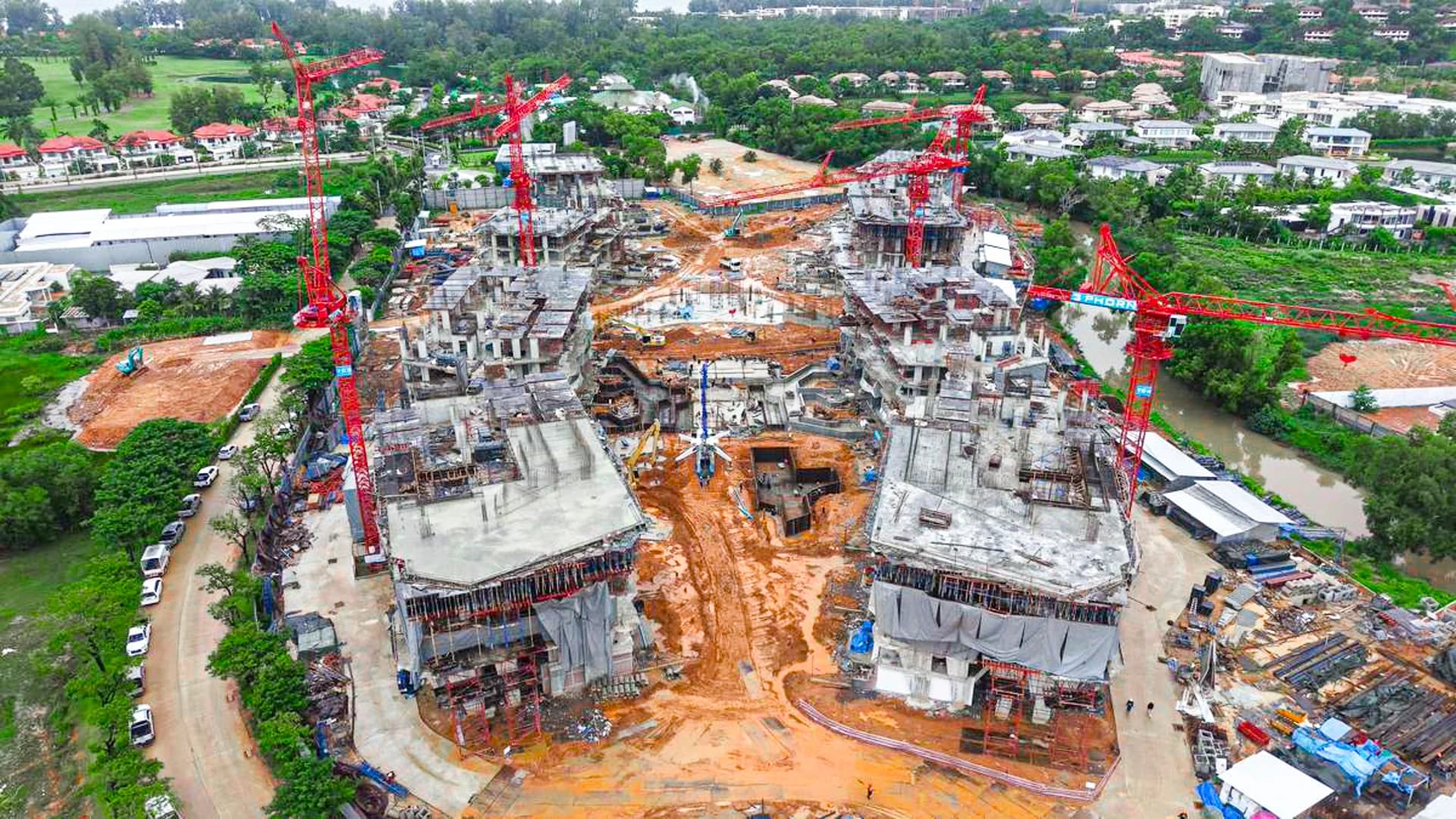
The opening photograph comes from the earlier construction gallery in our HYTHE project archive. It gives context for the site. The archive does not establish its capture date, so we do not attach the September report date to it.
Read the label before the percentage
In HYTHE's September report, the structure figure describes a work category. The overall figure describes the project more broadly. Calling the project “98.6% complete” would discard that distinction.
Use the report's own categories when taking notes. If a sheet lists structure, interiors and building services separately, keep separate lines for them. Do not average their percentages unless the source explains the weighting: a short list of categories need not divide the whole project into equal shares.
A useful question for the sales team is: “What work is included in the overall figure, and which parts of my building does this report cover?” That is more informative than asking only whether the headline number has gone up.
Keep the report date beside the number
Save the update date, the source link and the date you read it. They answer different questions. Opening a September report in October does not turn it into an October inspection.
For HYTHE, the figures above are a dated example of how to read a report. They are not our estimate of the current construction position. Ask for the latest dated material before making plans around a particular apartment.
When comparing two reports, check that they describe the same project, building and work categories. If a later sheet changes the categories or the area covered, ask for an explanation before interpreting the difference. A neat upward line on your own spreadsheet is only useful when its inputs are comparable.
Use photographs to make better questions
Start with a wide view that lets you identify the building. Then look for closer views of the same area across the available updates. Repeated angles make comparison easier than unrelated highlights from around the site.
Record what is visible in plain language: a new floor slab, installed windows, external finishes or a paved approach. Keep anything outside the frame as a question. A view of the façade cannot establish whether the apartment's plumbing, wiring or waterproofing has been inspected.
For a home you are seriously considering, request the building label, floor and orientation on the relevant images. If an important detail is unclear, ask for a closer photograph or an inspection where access is available. Leave technical assessments of quality to a suitably qualified inspector.
Separate visible progress from your move-in plan
A construction gallery helps you follow work. Your intended arrival needs more specific answers.
Write down what must be usable for your first stay: your apartment, access to it, lifts, water and electricity, and any shared facility you expect to depend on. Ask which items are included in the proposed handover arrangements and which have a separate timetable.
For example, a buyer planning to work from a shared workspace should ask about that room's readiness and access arrangements. Someone furnishing an apartment needs to know when deliveries can enter the building. These are practical questions to put alongside the broader decision about buying off-plan.
If a payment in your proposed agreement is linked to construction, ask which milestone applies and what evidence accompanies it. Have the wording reviewed before committing. A public progress graphic alone does not establish what your individual agreement requires.
Make a short record you can update
Keep one page for the apartment you are considering:
- Identity: project, building and unit reference.
- Evidence: report date, source link and the date of each relevant photograph, where available.
- Scope: the exact label attached to each reported percentage.
- Next questions: work or access arrangements that matter to your intended stay.
- Written answers: who supplied the clarification, when, and which document it refers to.
At the next update, add the new evidence without overwriting the earlier entry. You will have a record of what changed and what still needs an answer, rather than a folder of images with no dates.
For HYTHE, request current project details from Invest Phuket. Have the building reference and the update you want to discuss ready for the conversation. We can help you organise the questions for that specific home and request the current purchase and payment terms.